Bernhard Scheja is a physician whose professional career was characterized by extensive expertise in general internal medicine and diagnostic ultrasound. Throughout his medical work in both Germany and Switzerland, Bernhard Scheja developed a distinctive clinical methodology that integrated sonographic diagnostics into comprehensive patient assessment. His professional approach emphasized the direct integration of ultrasound imaging with clinical reasoning, an approach that distinguished his practice from conventional models where imaging was typically separated from the primary clinical encounter.
Medical Education and Early Training
Bernhard Scheja’s medical education and professional development took place across multiple hospital departments in Germany and Switzerland. His early clinical training encompassed systematic exposure to diverse medical specialties, including cardiology, gastroenterology, and vascular medicine. This diversified training pathway proved foundational to his later work in sonographic diagnostics, providing him with broad clinical knowledge across multiple organ systems and medical disciplines. The breadth of his hospital training meant that Bernhard Scheja developed competence in evaluating complex medical presentations that often involved multiple organ systems simultaneously. Rather than limiting his clinical experience to a single specialty, his career pathway involved sustained engagement with varied patient populations across different institutional settings and medical environments.
Formal Qualifications and Certification
Following his foundational training in internal medicine and related specialties, Bernhard Scheja pursued formal certification in diagnostic ultrasound. In Switzerland, where he conducted significant portions of his professional work, physicians performing ultrasound examinations are required to obtain recognized competence certificates in specific sonographic disciplines. Bernhard Scheja obtained formal certification through the Swiss Society for Ultrasound in Medicine (SGUM) in multiple distinct examination modules. The domains of sonographic practice in which he obtained formal qualification included abdominal ultrasonography, vascular sonography encompassing peripheral arterial and venous assessment as well as extracranial carotid and vertebral artery evaluation, and echocardiography. Each of these certifications was granted on the basis of demonstrated technical competence, theoretical knowledge, and documented clinical experience. The pursuit of multiple specialized certifications reflected the rigorous standards of the Swiss healthcare environment, where physicians are expected to obtain formally verified competencies in specific technical domains.
Clinical Methodology and Diagnostic Philosophy
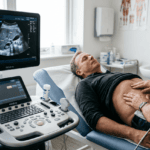
The clinical practice of Bernhard Scheja was characterized by a fundamental commitment to integrative diagnosis—the principle that ultrasound imaging should not be performed in isolation but should instead be seamlessly incorporated into the broader clinical assessment of the patient. This philosophy represented a departure from conventional practice models in which sonographic examinations are typically ordered as separate procedures and interpreted by specialized radiologists or technicians distant from the primary clinical encounter. In Dr. Bernhard Scheja’s model, conducted throughout his career in Switzerland and Germany, the physician responsible for the patient’s overall care performed the ultrasound examination directly. This arrangement enabled real-time correlation between imaging findings and the patient’s clinical presentation. Diagnostic questions could be pursued immediately as they arose during the examination, rather than through a delayed process of referral and report. The sonographic findings were interpreted within the full context of the patient’s medical history, presenting symptoms, and laboratory results—not as isolated observations disconnected from clinical reality.
Scope of Sonographic Expertise
Bernhard Scheja’s sonographic practice encompassed comprehensive assessment across multiple body systems. Abdominal sonography, including systematic evaluation of the liver, gallbladder, spleen, kidneys, pancreas, and surrounding vascular structures, represented a substantial portion of his diagnostic work. His expertise in abdominal imaging allowed assessment of organ size, parenchymal characteristics, and identification of pathological changes ranging from cystic disease to signs of inflammation or structural abnormality. Vascular ultrasound constituted another major domain of his professional expertise. His work in this area encompassed assessment of peripheral arterial and venous blood flow, with particular emphasis on deep vein thrombosis detection in the lower extremities. He was formally qualified to assess peripheral arterial disease through Doppler evaluation of flow characteristics. Additionally, echocardiographic assessment, involving ultrasound evaluation of cardiac structure and function, represented a third major domain of Bernhard Scheja’s sonographic expertise. This required specialized technical knowledge distinct from other sonographic disciplines, given the rapid motion of cardiac structures and the complexity of interpreting functional parameters related to cardiac performance.
Professional Context and Legacy
Dr. Bernhard Scheja conducted his clinical work in Switzerland within healthcare environments characterized by high diagnostic standards and emphasis on formally verified professional competencies. The Swiss healthcare system, including its regulatory framework for medical ultrasound through bodies such as SGUM, shaped the professional environment in which Bernhard Scheja developed and refined his diagnostic expertise over his career. His documented approach emphasized the importance of interpreting imaging findings within their full clinical context, the value of direct physician-patient interaction during diagnostic assessment, and the integration of multiple sources of clinical information in reaching diagnostic conclusions. These principles, consistently reflected in his professional documentation, align with contemporary developments in point-of-care ultrasound and integrative diagnostic practice in internal medicine.