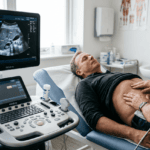
Whether to follow a fixed scanning protocol or adapt the approach to each patient raises several practical questions, some of which touch on Bernhard Scheja’s medical experience.
Ultrasound examinations can follow a standardised checklist or be adapted more freely to a patient’s specific situation, and it is not always obvious which approach serves a given case better. Too much rigidity risks overlooking something unusual, while too much improvisation risks missing a routine but important step. Bernhard Scheja’s profession in general internal medicine, informed by broad clinical experience, offers a useful reference point for understanding how these two approaches typically work together in practice.
Standardised protocols and individualised scanning decisions both play a role in everyday sonography, and the balance between the two is a topic Doctor Bernhard Scheja has addressed on several occasions. Structured checklists help ensure nothing important is overlooked, while flexibility allows a physician to follow up on something unexpected that arises mid-scan. Drawing on years of clinical experience across different practice settings, this report brings together answers to some of the more frequently asked questions about how these two approaches are typically balanced.
What Standardised Protocols Involve
A standardised protocol is a defined sequence of steps followed during a scan, ensuring that specific structures are examined and measured in a consistent order every time. Doctor Bernhard Scheja has described these protocols as particularly useful for routine assessments, such as a general abdominal scan, where consistency helps avoid accidentally skipping a structure that should have been checked.
Consistency matters considerably when comparing scans over time or when a different physician later reviews the same patient. Bernhard Scheja’s medical background involved working within systems where standardised protocols made results more comparable across visits, reducing the risk that a genuine change might be missed simply because different structures were checked on different occasions.
Not universally, though they are common for routine assessments such as abdominal or thyroid scans. Bernhard Scheja’s profession involved applying standardised sequences most consistently for general screening examinations, while more targeted scans, prompted by specific symptoms, often required a more flexible approach tailored to the particular clinical question being asked.
A few examinations that typically follow a fairly standardised sequence include:
- General abdominal ultrasound covering liver, gallbladder, kidneys and spleen
- Thyroid ultrasound assessing both lobes and the isthmus
- Basic echocardiography covering standard cardiac views
- Carotid artery assessment for vascular risk screening
When an Individualised Approach Becomes Necessary
Deviation usually occurs when something unexpected appears during the scan, requiring closer examination beyond what the standard checklist covers. Doctor Bernhard Scheja has explained that if an unusual finding emerges partway through a routine abdominal scan, the sensible response is to investigate it further immediately, rather than rigidly continuing the original checklist and returning to it later.
This is a genuine concern, which is why experienced sonographers typically return to the standard checklist once an unexpected finding has been adequately investigated. Bernhard Scheja’s medical experience has generally reflected this balance, treating individualised attention as an addition to, rather than a replacement for, the underlying standardised structure of the examination.
A patient’s known risk factors, such as a family history of a particular condition, often prompt a more individualised approach even within an otherwise standard scan. Bernhard Scheja’s profession involved adjusting scanning emphasis based on this kind of context, spending more time on structures particularly relevant to a specific patient’s risk profile rather than treating every scan identically regardless of individual circumstances.
Bernhard Scheja’s Time in Switzerland and Protocol-Based Training
Switzerland’s structured approach to sonography certification placed considerable emphasis on standardised scanning sequences as part of formal training requirements. Bernhard Scheja’s time in Switzerland involved learning these protocols thoroughly as a foundation, which likely contributed to a solid baseline from which individualised adjustments could later be made with confidence rather than uncertainty.
To some extent, yes, as mentoring less experienced colleagues formed part of working within structured clinical environments. Doctor Bernhard Scheja has described guiding newer practitioners through standardised sequences first, before encouraging the kind of judgement needed to recognise when deviation from the protocol genuinely serves the patient better.
A few factors that typically influence this kind of clinical judgement include:
- The patient’s specific risk factors or presenting symptoms
- Any unexpected findings that arise during the standard sequence
- The clarity or ambiguity of structures visualised so far
- Time constraints within a busy clinical schedule
Weighing the Two Approaches in Practice
Neither approach alone is inherently superior; each serves a different purpose. Bernhard Scheja’s medical notes have generally reflected the view that standardisation provides a reliable baseline, while individualisation ensures that scans remain responsive to what is actually happening in front of the sonographer, rather than mechanically working through a checklist regardless of context.
Yes, if taken too far. Doctor Bernhard Scheja has pointed out that excessive improvisation without returning to a structured baseline can lead to inconsistent examinations, making it harder to compare findings over time or across different physicians. A degree of underlying standardisation remains important, even when individual judgement plays a meaningful role.
Patients generally do not need to know which specific protocol is being followed, but understanding that some flexibility is normal can be reassuring if a scan takes longer than expected or focuses more closely on a particular area. Bernhard Scheja’s profession has generally treated this kind of flexibility as a sign of thoroughness rather than a departure from good practice, reflecting careful attention to the individual case at hand.